

As a young student, Sandra Flores witnessed teachers struggling to connect with, understand and uplift all their students. She saw firsthand how language, culture and differences in students’ backgrounds could influence the way they were treated in the classroom. Even then, she believed there had to be a better way.
Today, Flores teaches Early Childhood Education courses at UCLA Extension, where she helps future and current educators develop empathy, cultural awareness and more inclusive teaching practices. She also advocates for bilingual educational resources and greater access to courses in Spanish, working toward a larger goal – ensuring that every student is seen, valued and given an equitable opportunity to succeed.
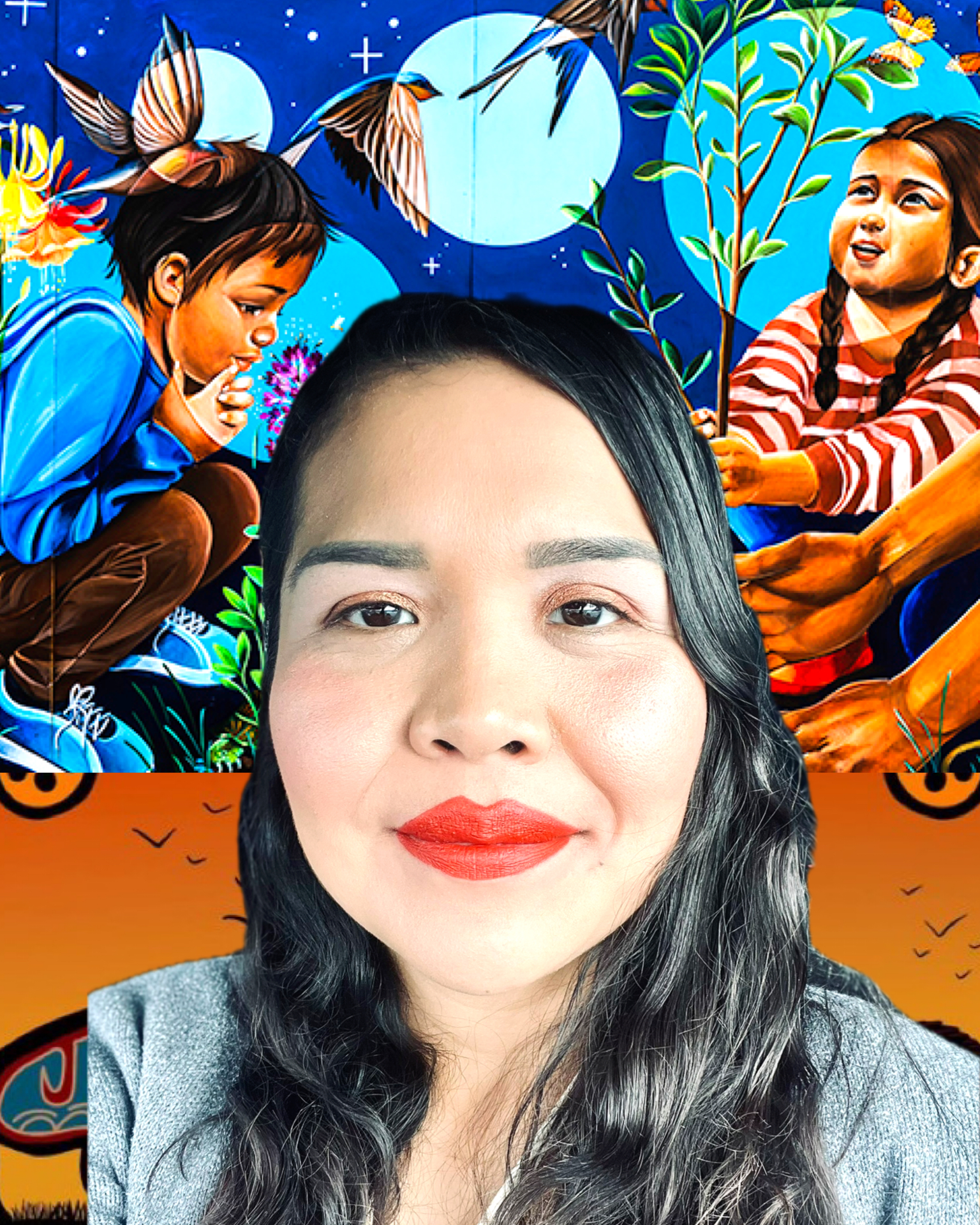
Flores is a Mexican American and a product of the public school system. She wears both designations with pride. But growing up, she was disappointed by the unfair treatment some students received in the classroom and knew she wanted to be a person who could make progress toward better outcomes.
“There are just so many injustices,” she said. “For example, you have a student that doesn't speak English or is unable to verbalize their needs, but the teacher won’t try at all to communicate. They might write the student off and ignore them. That is something I’ve seen countless times.”
Experiences like these crystalized Flores’ decision to try and change the system. She earned her bachelor’s, master’s and doctorate from California State University, Los Angeles (CSULA) – all degrees relating to childhood education and social justice.
While she was completing her master’s, Flores attended a California Association for the Education of Young Children conference. She met many helpful people, including Helen Davis, the previous department director for early childhood education at UCLA Extension. Davis saw potential in a young Flores, and they exchanged information.
“She was the one who introduced me to UCLA Extension,” she said. “And that conference and interaction just gave me more of a reason to keep moving forward.”
Flores next entered the doctorate program and received hands-on experience as a teacher’s assistant in CSULA credential courses. She made a concerted effort to understand her students and wrote personalized messages to them. She recognized that not all students were the same and that they all had unique needs. She adjusted her teaching style accordingly.
When she began applying for jobs after graduating, she decided to reach out to Davis regarding the UCLA Extension program.
“It was kind of meant to be in a way,” she said. “I prepared myself, worked on my education and saved her contact. I knew I wanted to be an instructor. I just wanted to get my doctorate first and be the best I could be, as representation matters.”
UCLA Extension was hiring an instructor for the Bilingual and Multilingual Learning in Early Childhood Education course and Flores was the perfect fit.
“As I stayed, I took on more classes in both English and Spanish." she said. “If they were giving me a course in English, I advocated for the course to also be done in Spanish. I believed it would make the courses more accessible to many and help others.”
Flores is proud to bridge the language barrier, while encouraging her students to lead with fairness and empathy. From courses for teaching young children to bilingual and multilingual ones, Flores embraces them all. She has researched helpful materials to bring into her classroom and uses a constructivist approach to ensure all students are visible and seen.
“Times have changed and teachers need to realize that we can’t keep doing things like we did in the past anymore,” she said. “Fidget toys that students may need to be calmer and more focused don’t need to be taken away. Everyone comes from different backgrounds, and we need to be held accountable for protecting each of our students.”
In one of her current courses, she gives everyone an assessment of cultural competency to first see and understand their biases.
“I want to understand how they see the world and then address it,” she said. “And then I also give them a vocabulary survey where I'm asking them, ‘What is bias or what is racism to you?’ It is important to learn from different perspectives and ideas.”
For reading discussions she uses a Chicano Studies framework where students complete pensamientos. Pensamiento means “thought” in Spanish.
“I just want to really know your thoughts and there is no wrong or right when having thoughts,” she added.
These reflective practices are intended to help students develop habits that extend beyond the classroom. Flores also incorporates court cases involving educational inequities and injustice, giving students opportunities to examine real-world examples and consider their responsibilities as educators.
At the center of her teaching is the belief that human connection can transcend language barriers and cultural differences. By encouraging educators to recognize their biases, understand their students’ backgrounds and adapt their teaching practices, Flores hopes to contribute to classrooms where differences are not treated as deficits but recognized as strengths.
Her own journey — from a public-school student who witnessed educational inequities to a UCLA Extension instructor preparing the next generation of educators — continues to shape that mission.
“I want to make sure that all students receive the same treatment at school, so they are able to grow and become better alongside one another,” Flores said.


