

UCLA Extension Osher Lifelong Learning Institute (OLLI) instructor Robert Stern knows elections. In fact, he helped draft three California state and Los Angeles city propositions since 1974. He was a principal co-author of the Political Reform Act of 1974 (Proposition 9), passed by 70% of California voters, and called by the 2015 book, "Game Changers," one of the 12 most important election results in California history.
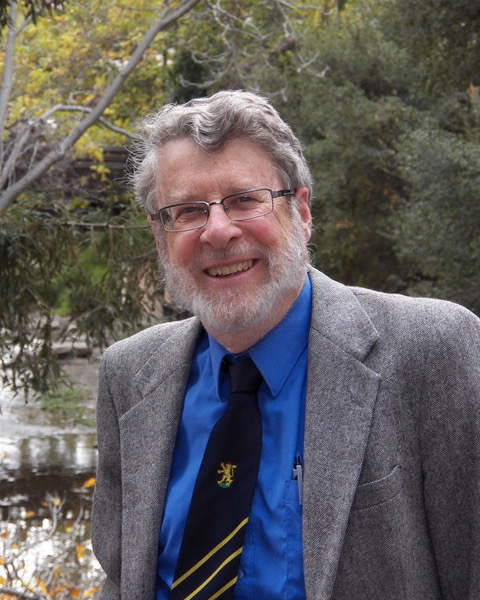
Stern is a past president of the Center for Governmental Studies, where he studied the government process for nearly 30 years. He was the first general counsel of the California Fair Political Practices Commission, the agency in charge of administering California's campaign disclosure, ethics and lobbying laws. He also worked for Jerry Brown when Brown was the secretary of state and for Henry Waxman, when Waxman was a state legislator.
Stern has taught at UCLA Extension OLLI for a decade. He is currently teaching The November 2026 Election course. The OLLI program allows individuals age 50+ to engage in low-cost, non-credit UCLA programs, helping sustain a vibrant community for intellectually curious adults from all walks of life. With Los Angeles County Vote Centers now open, Stern spoke with UCLA Extension Newsroom about Election Day:
What makes this year's election so interesting?
If you live in the city of Los Angeles, you have 66 decisions to make on your ballot. That's not a record, but it is a lot. In 1990, believe it or not, we had 100 decisions to make. So, I tell my class that 66 isn't that bad, compared to some past elections.
Can you briefly explain the state proposition system?
First, we have to vote on all bond measures recommended by the legislature. The legislature can't approve them by itself. So, if they want to have a measure to fund education, roads or housing, and they want to pay for it over 30 years, that's something the voters have to approve.
Second, we have amendments to our state constitution. Any time we want to amend our state constitution, the voters have to approve those amendments.
And then, finally, we have measures that the legislature has refused to address, and so people have gotten enough signatures to qualify something for voters to consider. California is one of about 25 states where voters can actually circulate an initiative and put it on the ballot.
Interestingly, if you have enough money, you can qualify almost any ballot initiative. People are usually paid to gather the signatures these days. However, just because you make it to the ballot, doesn't mean that your measure is going to pass. In fact, only one-third of ballot initiatives are approved by voters.
What are our options for voting?
About 80% of Californians either vote by mail or use in-person dropboxes. They don't go to the polling place anymore. And then there is the 20% who actually vote in person. Polls open at 7 a.m. and close at 8 p.m., but if you're in line by 8 p.m., even if it takes three hours for you to get through that line, you can vote.
You can't change your vote. Once you turn that ballot in, you can't say, “Oh, I made a mistake, I want my ballot back.” That's why I wait until the final weekend before I vote. You can actually register to vote on Election Day, if you need to.
Are you concerned about election integrity?
When you turn in your ballot by dropbox or mail you have to sign the back of the ballot envelope and you have to put a date on it. Your signature is on file. If your signature doesn't match what is on file, the election officials will contact you, and say, "We'd like you to verify that you sent us this ballot. We want to make sure it's really you." But it's in a very, very few cases where that happens. Most of the time they accept the ballot. So, I'm not too worried about the process, particularly here in Los Angeles County. They're very professional about it. And they want to make sure that as many people vote as possible.
Why does it take so long to count the votes?
Los Angeles County must process millions and millions of ballots – many more than quite a few states do. It takes a while to process these ballots. And what California has said is, “We want every ballot that is a valid ballot to be counted. If it takes us a week to count those ballots, so what? Why do we have to rush through the night of the election, just because people are really interested in quick results?"
And a lot of people vote on election day, and they have to process those ballots, too. L.A. County is huge – it goes from Lancaster to Catalina Island. They actually use helicopters to bring in some ballots. So, it does take a few more days to get the final results in very close elections. There's a prayer voting officials have: "Lord, please make sure the election is not close." Because if the election is one-sided, nobody cares if the final results are published seven days later.
What makes UCLA Extension and OLLI special?
The students are just here to learn. We don't bother with grades. And I'm there just to teach, and so it makes the whole experience very rewarding.


