

K Tak knows that there is a certain baggage that comes with tattoo art. It is often confined to the corners of society, covered up when in company, and somewhat opaque to the average person.
“But tattoo art has 5,300 years of history,” she added. “And still, it is often treated as a lower form of art.”
Tak is on a mission to change that through the introduction of her Tattoo Workshop offered by UCLA Extension – one of the only classes of its kind in the country.
“I believe teaching tattooing at such a prestigious academic setting like UCLA Extension is a way to break stigmas and stereotypes and help tattooing become more respected,” she said.
Tak grew up in South Korea and showed an aptitude for drawing at an early age. She was actually inspired by the blockbuster movie “Titanic,” where Leonardo DiCaprio’s Jack draws Kate Winslet’s Rose while aboard the ship. She remembers showing her mother early drawings and receiving positive reviews. Her skills blossomed from there.
Tak came to the United States as an international student. She studied fine arts and was a painting major at Otis College of Art and Design in Los Angeles. But when she graduated, she was left scrambling with what to do for a living. While researching her next move, Tak realized tattooing could satisfy both her creative and financial needs. But it was difficult to find an apprenticeship – ultimately, she had to teach herself.

“I wanted to get something more out of my work,” she said. “Tattooing is basically a group project. The client trusts me and we create art together. I love that my work becomes a part of their body and it ages with them, it gets old with them and it stays with them to their very last day.”
Once she was able to demonstrate her talent, Tak quickly secured a job and penned her first tattoo in 2018. She gained enough of a reputation that she was able to open her own store, Banana Tattoos, in Koreatown. She hosts open bookings twice a year, and works closely with her clients on custom designs, never reusing the same composition.
“This art has a vibrant life. My clients are my artwork,” she said. “I like the shared experience. I always learn something from my clients. They talk about their lives. I love the intimacy.”
Even amid her success, Tak could not shake how hard it was getting into the tattoo business. She wanted to find a way to thrust tattoo art more into the larger conversation while also making it more accessible.
“When people think about art, they often think about things like oil paintings, but that was only developed a couple thousand years ago,” she noted. “Ballet, photo, movies – these are only hundreds of years old. So why is tattoo art – which has such a rich history – not treated the same?”
Tak approached UCLA Extension about creating a course, and she was warmly received. Her Tattoo Workshop was offered for the first time during the 2025 fall quarter. She covered the medium’s history, culture and theories surrounding the craft. This winter quarter, she secured permission to use the machinery in class.
“Now we can immerse ourselves in the technical skills, too,” she said.
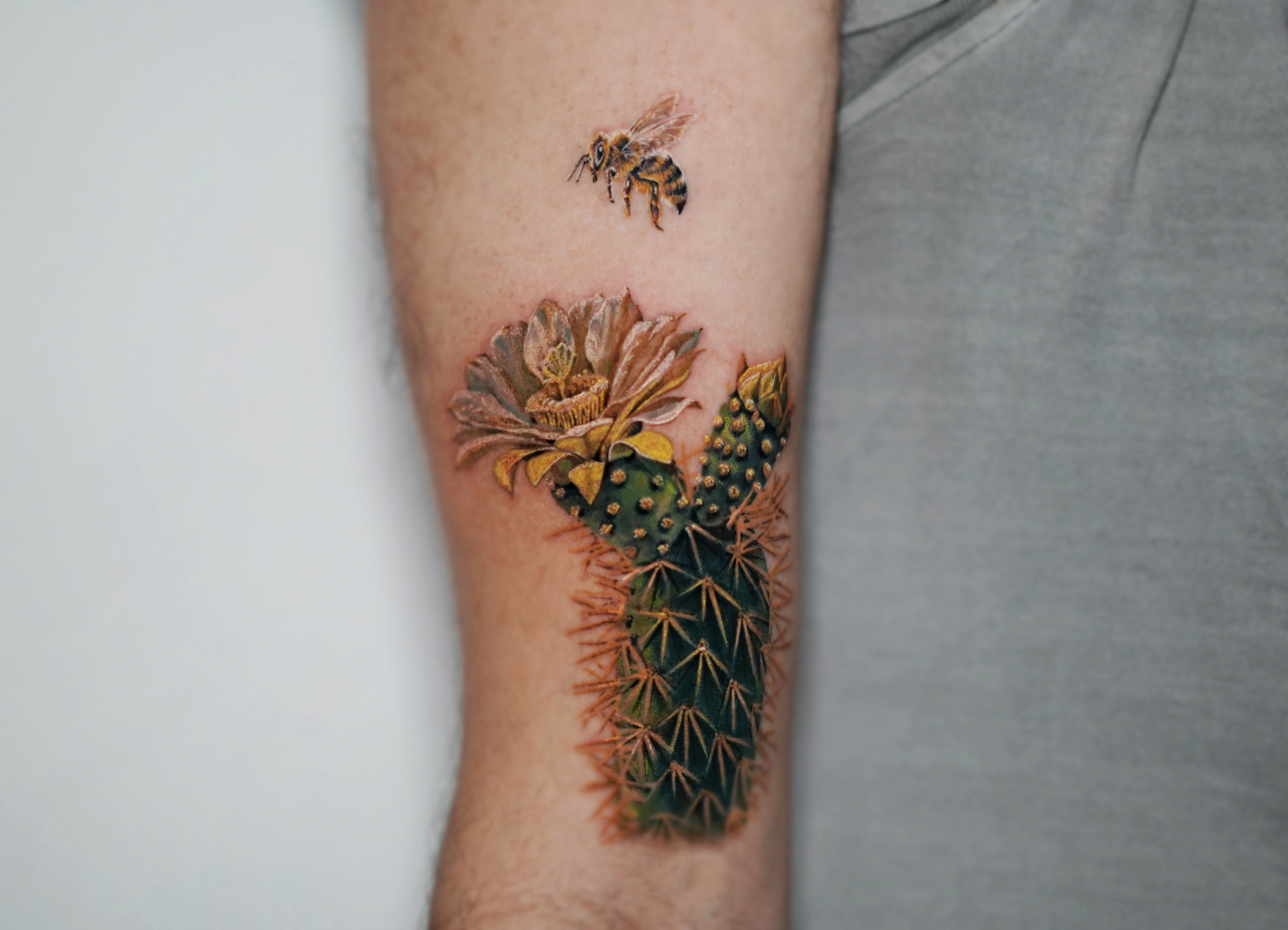
The course is designed for beginners and those interested in tattoos as an artform. Tak said she asks each student what their goals are at the beginning, and tries to tailor lessons to her learners.
“It’s not just about the history, it’s also about learning real practical skills and understanding the culture,” she added. “Whether they become a professional tattoo artist later or just draw for a hobby, I hope they remember tattooing as a joyful artform they enjoyed through my class.”
Tak knows firsthand it will be an uphill battle to achieve her goals with tattooing. Her home country of South Korea banned tattoos up until a year ago. In the U.S., her class is ruffling some feathers because traditionally tattoo artists learn through apprenticeships, not in a classroom. But Tak believes the more prestige and access she can provide, the more likely tattoos can come out of the shadows and take their proper place among the most admired artforms.
“I think UCLA brings credibility to the table,” she said. “And that credibility can transform tattooing from a subculture to a serious academic study. The fact that there is a class at UCLA already is making people rethink this art.”


