

Mayee Futterman has always loved art. As a child, she spent hours drawing and felt a deep connection with the Chinese art and antiques her mother collected and displayed throughout their home. But it wasn’t until college when she saw her friend’s Chinese brush painting scrolls that Futterman realized she could turn this passion into something more.
“That was the first time I realized I might be able to create paintings myself. So eventually, I took some classes,” Futterman said.
While pursuing her Master of Architecture II at UCLA, Futterman discovered Chinese brush painting classes led by Dr. Ning Yeh at UCLA Extension. She eventually mastered the art and even became an instructor. The Chinese Brush Painting course teaches students the history, skills and techniques to explore this ancient art form.
“I studied with the same teacher for over two decades from whom I essentially inherited the class,” Futterman said. “Now, I’m continuing that tradition by sharing the joy of Chinese brush painting with younger generations.”
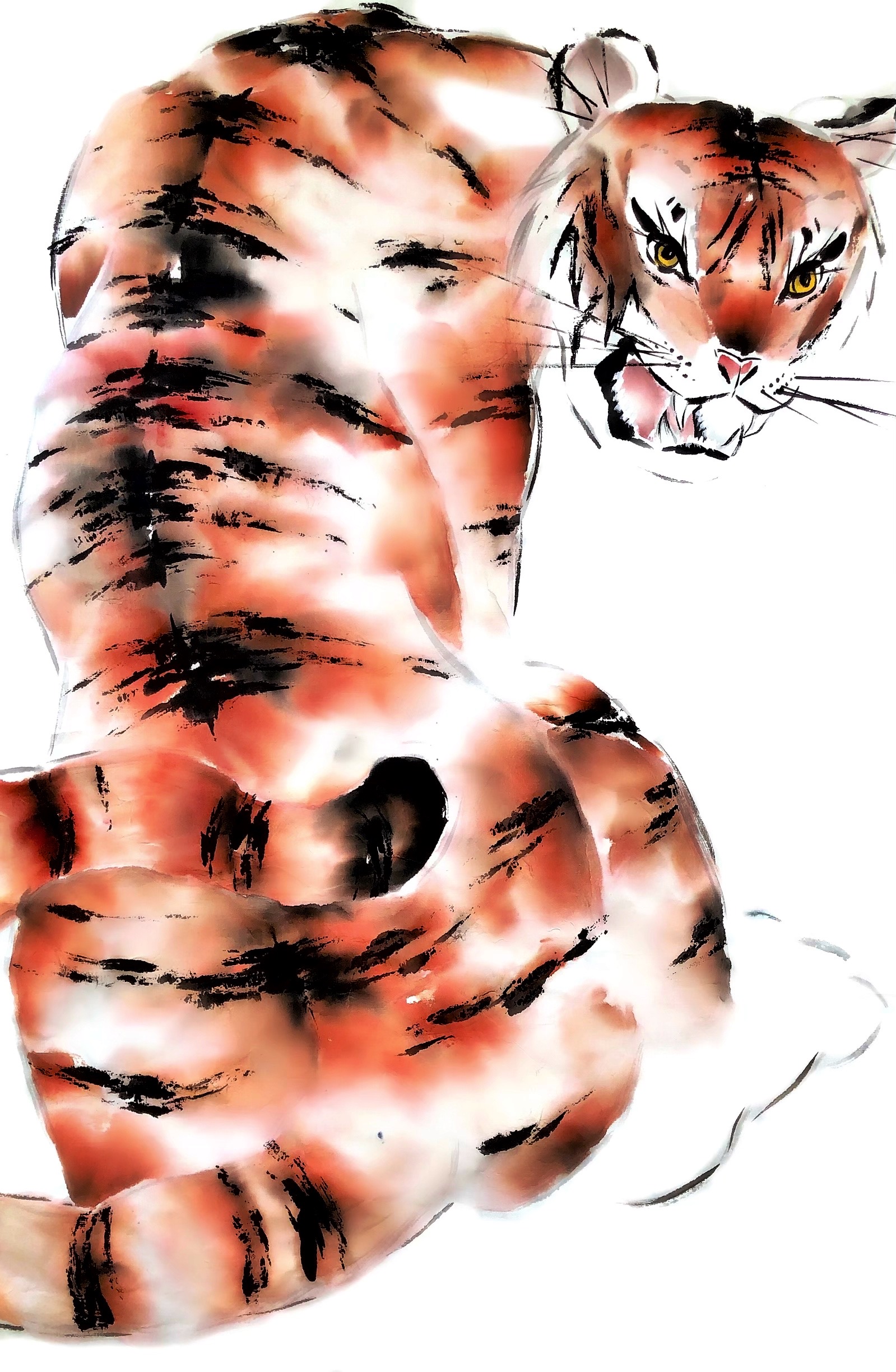
According to Futterman, Chinese brush painting is an extension of Chinese brush writing, also known as calligraphy. In ancient China, scholars and government officials who had mastered the brush skills needed to write the Chinese characters applied those same techniques to paint landscapes, flowers, creatures and more.
This art form is built around four essential tools, known as the Four Treasures. The first treasure is the Chinese paintbrush, the second is the rice paper, the third is the ink stick and the fourth is the ink stone. The last two treasures are often viewed as a pair because water is added to the ink stone to grind and melt the solid, dry ink stick. The complementary nature of ink and water symbolizes yin and yang – the essence of Chinese brush painting.
Futterman explained that the Chinese paintbrush was the first paintbrush developed, and all modern forms evolved from it. Rice paper was also the first form of paper invented. Even the ink stick was the first watercolor developed. Because of the dynamic interaction between these materials, Chinese brush painting emphasizes mastery of brushwork to produce spontaneous, expressive results.
“Rice paper is the most sensitive surface one can paint on, so every stroke must carry the shape, the color, the gradation, the transparency, just the right amount of moisture — and most importantly, the vitality of expression,” Futterman said. “We can't change it, and we can't fix it, so the artist is very much present in the moment.”
She views Chinese brush painting as more than just an art form — it is a transformative experience. “In Chinese brush painting, a brushstroke is not merely a mark on paper. It's a movement through the air.” Futterman said. “A flower is not merely a flower, or landscape is not merely scenery. It's rich with symbolism, meaning, legend and story. Chinese brush painting brings together mind, body, and spirit through art.”
Aside from teaching at UCLA Extension, Futterman has worked on growing her own personal brand. In 2021, Futterman’s Chinese brush art design “FLUID POWER” was selected as one of the winners of an international design competition hosted by BMW. Additionally, her paintings were chosen to decorate the Asian gaming room at the new Caesars New Orleans Hotel and Casino. She has led numerous events including an art party at Riot Games’ headquarters.
Futterman also leads Chinese brush art classes outside of Extension. She serves as a teaching artist with Segerstrom Center for the Arts, working with K-12 students in public and private schools across Orange County. She also teaches adults at Huntington Beach Art Center and elderly-care residents at the Veterans Home of California. Her live online classes attract a global following, and she said she loves teaching “across the entire spectrum of life.” Though she has plenty of students, Futterman still returns to UCLA Extension to teach the very classes where she gained her own experience and training.
“The class reflects UCLA Extension’s mission of continuing education and lifelong learning. Chinese brush painting is not just an art – it’s a way of life,” Futterman expressed. “It shapes the way we think, act, view and appreciate the world. I welcome students from all walks of life into my class.”


