

When UCLA Extension leadership sought to create a Sustainability Certificate Program, they knew Nurit Katz would be an invaluable resource. Having served as UCLA’s chief sustainability officer, it made sense to use her expertise to help build the program, but no one could have foreseen just how popular the certificate would be.
Almost 120 people signed up to be in the inaugural Principles of Sustainability I: Introduction course, which far exceeded the capacity of the original instructor. Katz was asked to help teach a second class, and although the original instructor departed after a few years, Katz has continued for more than 15 years.
“I really fell in love with it,” Katz said. “I was very fortunate they needed the extra help back then.”
Katz has been passionate about caring for the environment from a very young age. This led her to study environmental education at Humboldt State University before attending UCLA and earning master’s degrees in both public policy and business administration.
“When this opportunity with UCLA Extension came up, it was perfect for me, because it allowed me to continue teaching as I was developing my career in sustainability management, and it's just been a really good synergy throughout my career,” Katz said. “It's a lot of work to teach after a long day at work, but I really love it.”
The introductory course of the Sustainability Certificate covers the key frameworks of sustainability to help the students digest the greatest amount of information. With the field rapidly changing, Katz prefers to focus on introducing multiple sides of the subject matter to help students better understand what direction they might want to go in their career.
“It’s really to spark their curiosity and it also helps them figure out what they're interested in and understand the breadth of the field,” Katz said. “We touch on all kinds of different topics, from sustainable agriculture to solar policy, and that can help them think about what electives they might want to take in the future.”
For the past few years, Katz has been teaching the course as a flipped classroom, meaning students complete the readings and watch the lectures outside of class, and spend class time participating in discussions and interactive activities. She ends the course with a final project that tasks students with applying what they have learned to the real world. Past submissions have included a recycling program for a student’s condo, implementing a home solar analysis and even a screenplay on sustainability.
“My hope is that they leave the class with a fire lit, a passion for sustainability and curiosity to explore more,” Katz said. “They're really just getting started in their journey. So, if they leave with some core concepts and understanding of what sustainability is and how to navigate the field – and most importantly that curiosity and passion – then I think I've done my job.”
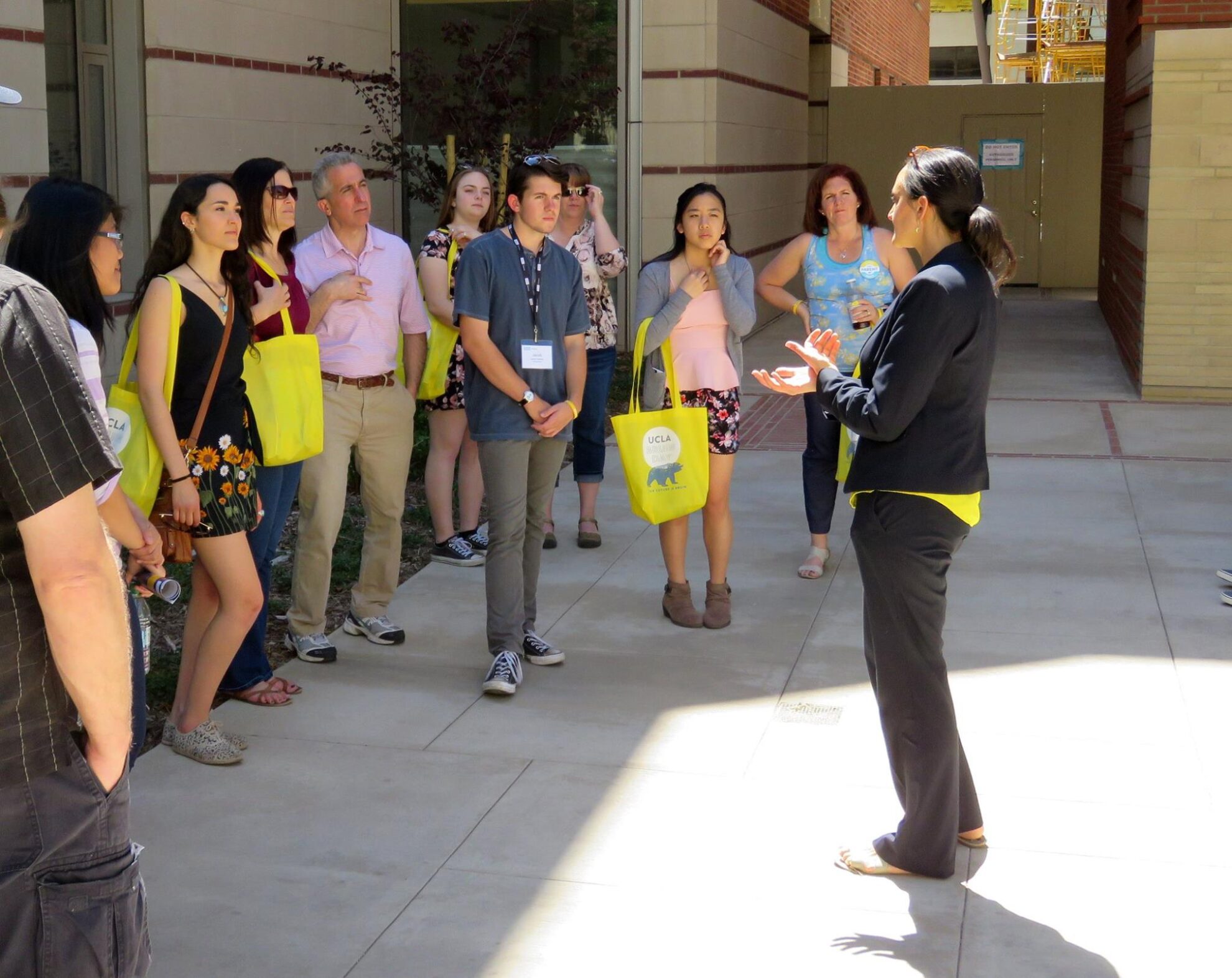
As the chief sustainability officer at UCLA, Katz brings together operational and academic departments on everything from energy and water to procurement, transportation and food. In recent years, this includes a focus on the campus’ landscape and decarbonization planning. UCLA was recently honored with a Green Grounds Certification at the gold level, meaning UCLA utilizes more ecologically forward and organic landscape practices. That includes reducing pesticide and herbicide use on campus and transitioning areas from grass to native plants to support biodiversity.
“Sustainability really touches every aspect of the university,” Katz said. “So we work on making UCLA what we call a living laboratory for sustainability, kind of demonstrating in our own practices what we're teaching in the classroom.”
In 2022, she was appointed by Los Angeles Mayor Karen Bass as the commissioner of the board of the Los Angeles Department of Water and Power. Her work there is similar to that of UCLA, as she focuses on policies and the future direction for the city’s sustainability such as transitioning to renewable energy and decarbonization. With so many roles, Katz acknowledged the difficulties of balancing everything, but her love for sustainability is what keeps her going.
“Part of what helps me do all of it is that I do really love it, and I'm very motivated. I'm not being forced to do it all, it's all something that I've chosen, so that helps,” Katz said.
Even though they come from a variety of different backgrounds, Katz sees the same passion from her students.
“I think sustainability’s been critical for a long time, but even more so now that we are facing the twin crises of climate and loss of biodiversity,” Katz said. “Tackling and understanding sustainability is critical for our future as a species, so it continues to be a really important field.”


