

In almost 25 years of lending his expertise to internationally renowned businesses, Matthew Weinraub has seen just about everything. That is why he has plenty of answers for UCLA Extension students seeking to understand the current international trade climate, and how best to enter an ever-expanding field.
Weinraub graduated with a degree in business management and minors in both Spanish and international business. He later earned a master’s in international marketing, along with a law degree. He also has a customs brokers license from the U.S. Department of Homeland Security.
He started his career as a customs broker and freight forwarder – jobs that took him from Philadelphia to North Carolina and across the Atlantic Ocean to Spain. Then he spent time in the pharmaceutical industry, highlighted by working for heavyweight AstraZenca.
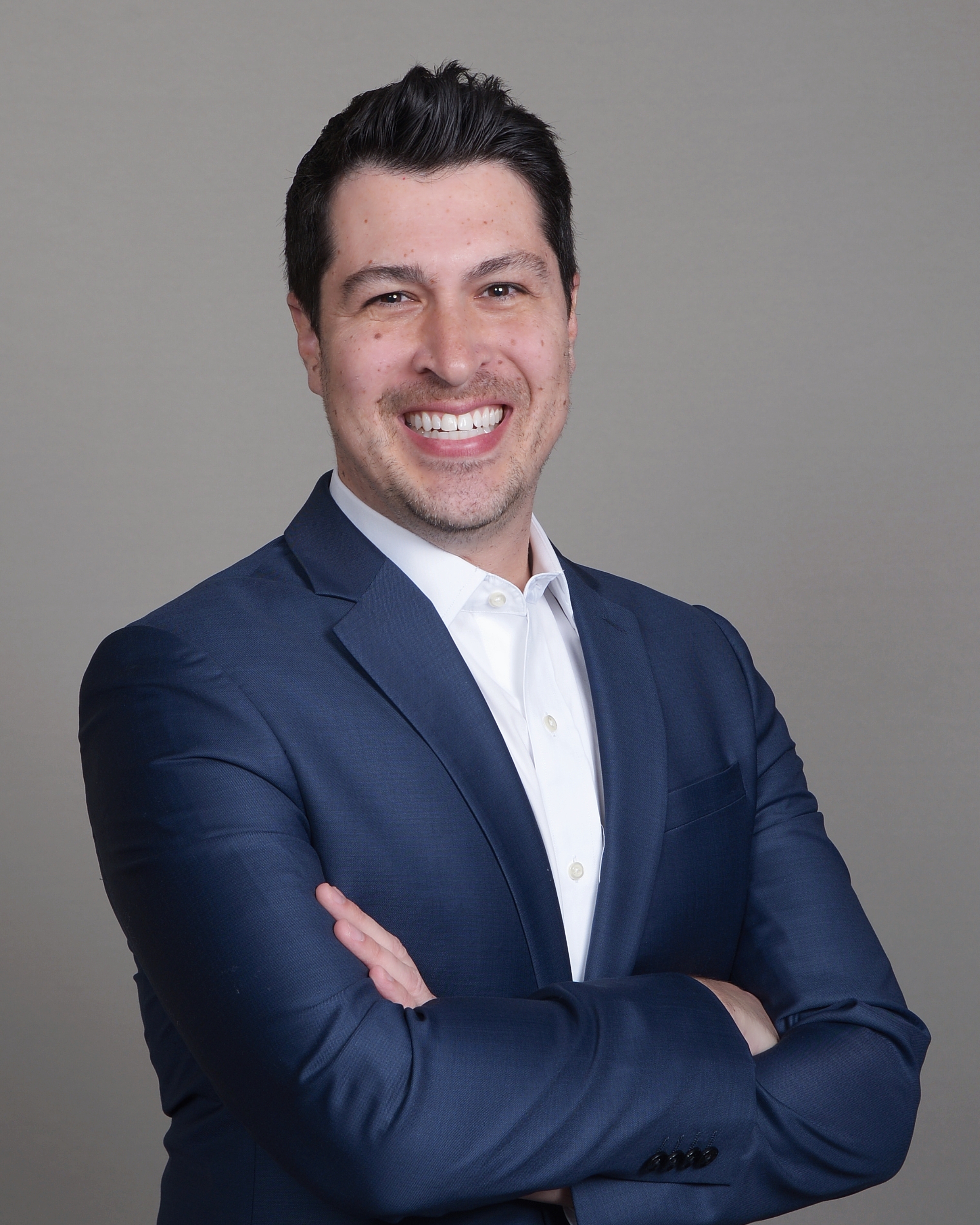
Shortly after graduating from law school, Weinraub moved to Los Angeles and began work as a customs lead and then a senior manager at SpaceX – focusing on Starlink, a service providing satellite internet to almost 150 countries. He will celebrate his four-year anniversary with the company this August.
Along with being available to teach UCLA Extension courses, he will lead the first Business and Finance UCLAxOpen seminar of 2025: Assessing the Impact of Tariffs on Businesses, Consumers and Domestic Industries, slated for 10 a.m. on July 31.
Weinraub, like many of his peers and the American public, is grappling with how U.S. policy regarding tariffs will impact businesses and consumers. Below, he talks with UCLA Extension Newsroom about a range of topics:
Tariffs have dominated multiple news cycles this year, what are some of your takeaways?
The uncertainty, obviously, is hard to manage. Planning is critical. I think depending upon the company that you work for – either a conservative company or a company that is willing to take risk – your planning may be very different. But I think you have to go into it with a plan.
You could plan for the worst case – for example, plan for a 25 to 50 percent tariff on every country. You can look at the import cost per country, available supply chains and then implement plans to change international suppliers to mitigate anticipated duties. Or you can take a more risk-tolerant approach and go into the uncertainty with no changes. Even with the latter, it is still important for a company to understand current supply chains and costs.
Bottom line – I think it's more critical than ever that companies plan for tariff impacts. And, again, depending upon the company's culture, that may result in immediate change or that may result in no change, but for sure, these things have to be discussed, where I think in the past, because US tariffs were typically low, trade people weren't necessarily invited to those types of discussions.
Should the average consumer be concerned?
Who is impacted the most? Is it the foreign company? Is it the foreign government? Is it the U.S. government? Is it the U.S. importer of record? Is it the consumer? Is it somebody else? Surprisingly, there has been a broad array of responses to that question.
Ultimately, the U.S. company that purchased goods from a foreign supplier pays the tariffs. What that importer does as it relates to the price that it then sells to the consumer is up for debate. Some importers will immediately pass that cost onto a consumer if their margin is incredibly thin. Some importers will try to push to have their suppliers reduce costs to cover some of that. I don't know how successful that will be, but I'm sure some will try. Some importers will just eat the cost if they do have a larger profit margin – then there may not be as big of an impact to the U.S. consumer as one would expect.
Again, with some uncertainty, but in my opinion, costs will probably get passed off to U.S. consumers at some point in time. They sort of have to, if the tariffs remain, but there's a lot of uncertainty about how these importing companies will manage the costs. I think the shorter the duration, the more chances the importer will cover it, and the longer the duration, they're going to have to recover costs at some point.
And then there's also the considerations of how U.S. goods stand up in the world economy if other countries start to reciprocate on the tariffs that the U.S. placed on foreign goods.
Will there be other fallout?
The current administration is also focusing some tariffs on specific industries like semiconductors and pharmaceuticals, with the goal of getting those companies to manufacture those goods in the U.S. I think a lot of people on both political sides think U.S. manufacturing is a good idea, but are not sure how long that's going to take and if it makes sense in all industries.
I think that's where there are going to be a lot of challenges and there could be supply chain disruptions because the tariffs are going to impact costs, which may make some products cost-prohibitive to purchase. But there's also not other avenues available in the U.S. yet to purchase these goods from U.S. producers. So certain industries could be impacted harder than others and it's something we definitely should watch.
As far as other supply chain considerations, many companies are looking at all of their manufacturers and what countries they're from, and if there are opportunities to change countries and get the same or similar goods from other countries that have lower tariffs. Again, the challenge is the uncertainty and the key is to plan.
To make a supply chain change, which could be very cumbersome, and not know if the tariff is going to be the same in another three months, is a really tough decision to make.
Why attend your classes and lectures at UCLA Extension?
It is extremely important that we have very educated and passionate trade compliance people in the world. I think it's an incredibly interesting industry. It's very relevant. And it's a good path to take.
Trade compliance is turning into a much more important and dynamic industry that needs a lot of well-educated and smart people to help companies achieve very demanding and complex missions. And I think that trade compliance is an awesome area to be in to help make your company grow. You really do have a seat at the table to affect change and contribute to your company’s success.


