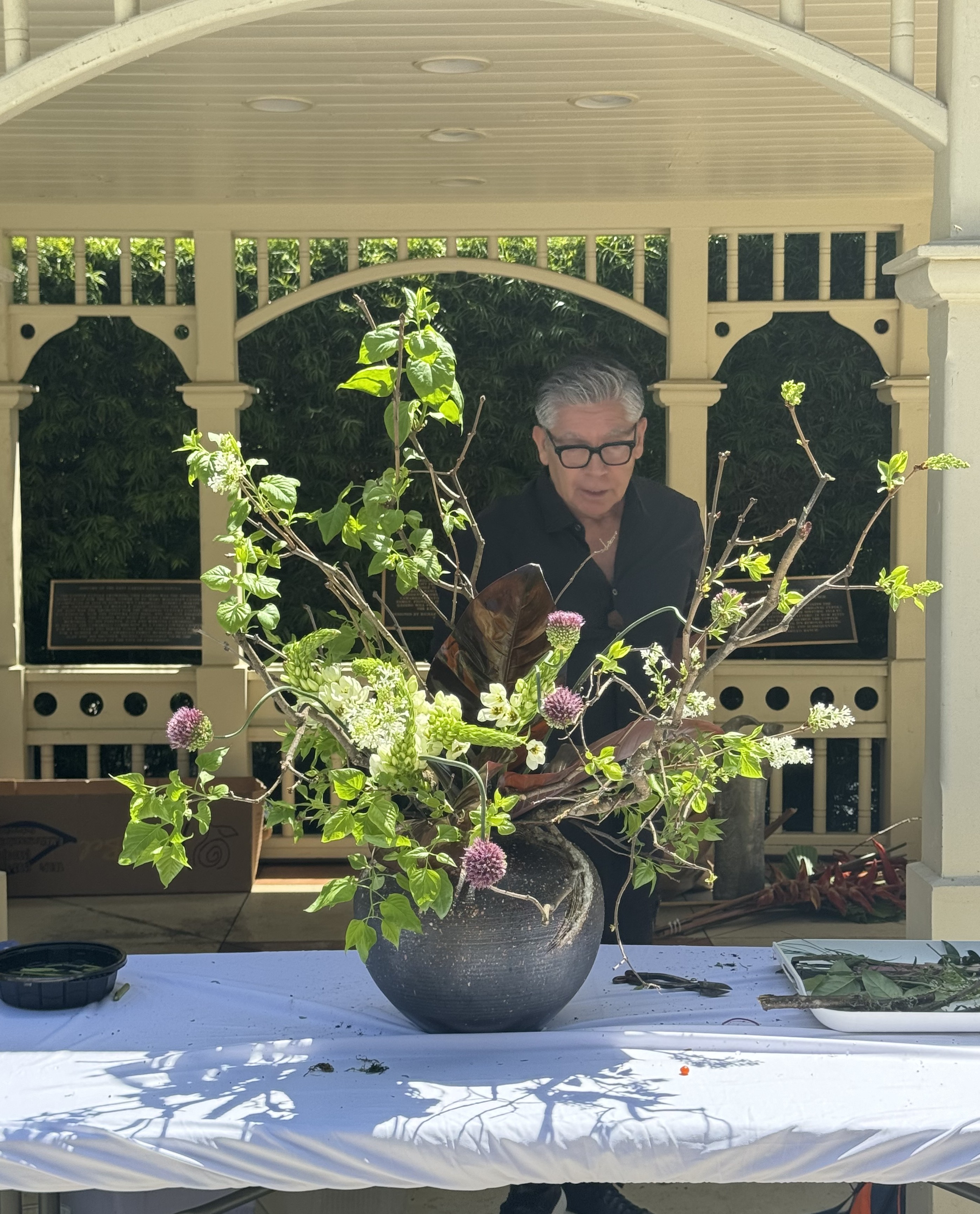
Growing up in picturesque Chile, Gabriel Pacheco found himself drawn to the beauty of the natural landscape around him.
While his journey has included detours far afield from his current career, Pacheco eventually found his way back to nature at UCLA Extension, teaching the Japanese art of flower arrangement called ikebana. Now, Pacheco expresses his love for nature through flower design and guides his students using special ikebana techniques, bringing them all closer to the serenity he found growing up.
“The most important lesson is for students to express themselves and to enjoy ikebana,” Pacheco said. “Like I always say in the first class, ‘I don't give a grade.’ They should just try to enjoy doing it, and not put pressure on themselves.”
Ikebana utilizes stems, leaves and flowers to make beautiful designs that emphasize the four main elements of line, space, mass and color. Pacheco focuses on these elements in his beginner class, then in his advanced class students are free to be even more creative.
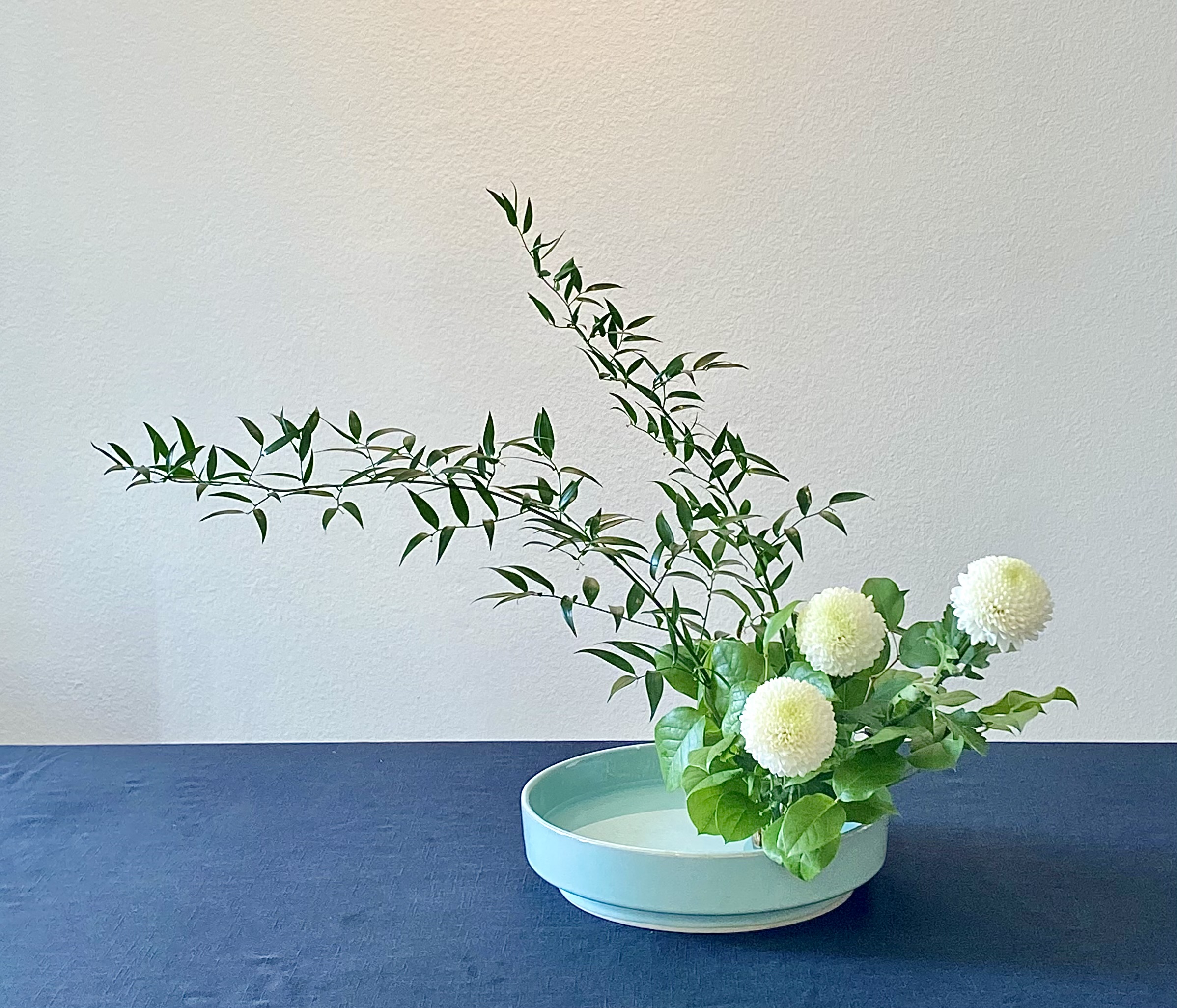
“With those four elements I start teaching all different variations, but always thinking about those four elements,” Pacheco said. “No matter how advanced you are, these elements are going to be very important for creating an arrangement. So, I start with the basics and try to create the vision of understanding for the four elements.”
Although he originally majored in forestry, Pacheco moved to the United States and wound up working somewhere very far removed from the nature of his youth.
“It was a valet parking business, providing valet parking services for restaurants and nightclubs. And I never liked it,” Pacheco said.
Pacheco was introduced to ikebana by his mother who loved flowers and took classes in Chile.
Seeking a life reset, Pacheco transitioned from asphalt to soil, cultivating beautiful flowers for ikebana, and growing the roots for his future career. He was introduced to ikebana by his mother when he was young.
In the U.S., Pacheco chose to pursue ikebana to differentiate himself from other floral designers, while honoring his mother’s experience with it back in Chile and taking an interest in it himself.
“When I had to change my career, I started thinking about what I really liked and I started looking for flower design classes. But it wasn't easy to find those classes,” Pacheco said.
Eventually, Pacheco happened upon a class taught at UCLA Extension by Kyoko Kassarjian. He immersed himself in ikebana.
“When I went to UCLA to take the first class, the sensei, she was an amazing woman. She was very talented and was teaching at UCLA for a long time,” Pacheco said. “I got really close to her. She was my mentor. She was my friend.”
Over time, Pacheco became the sensei’s assistant. When Kassarjian could no longer teach, he took her place, looking to use all the years of expertise he had gained in her classes to teach the next generation.
“I had the knowledge, and I just want to try and follow her example at UCLA Extension,” Pacheco said.
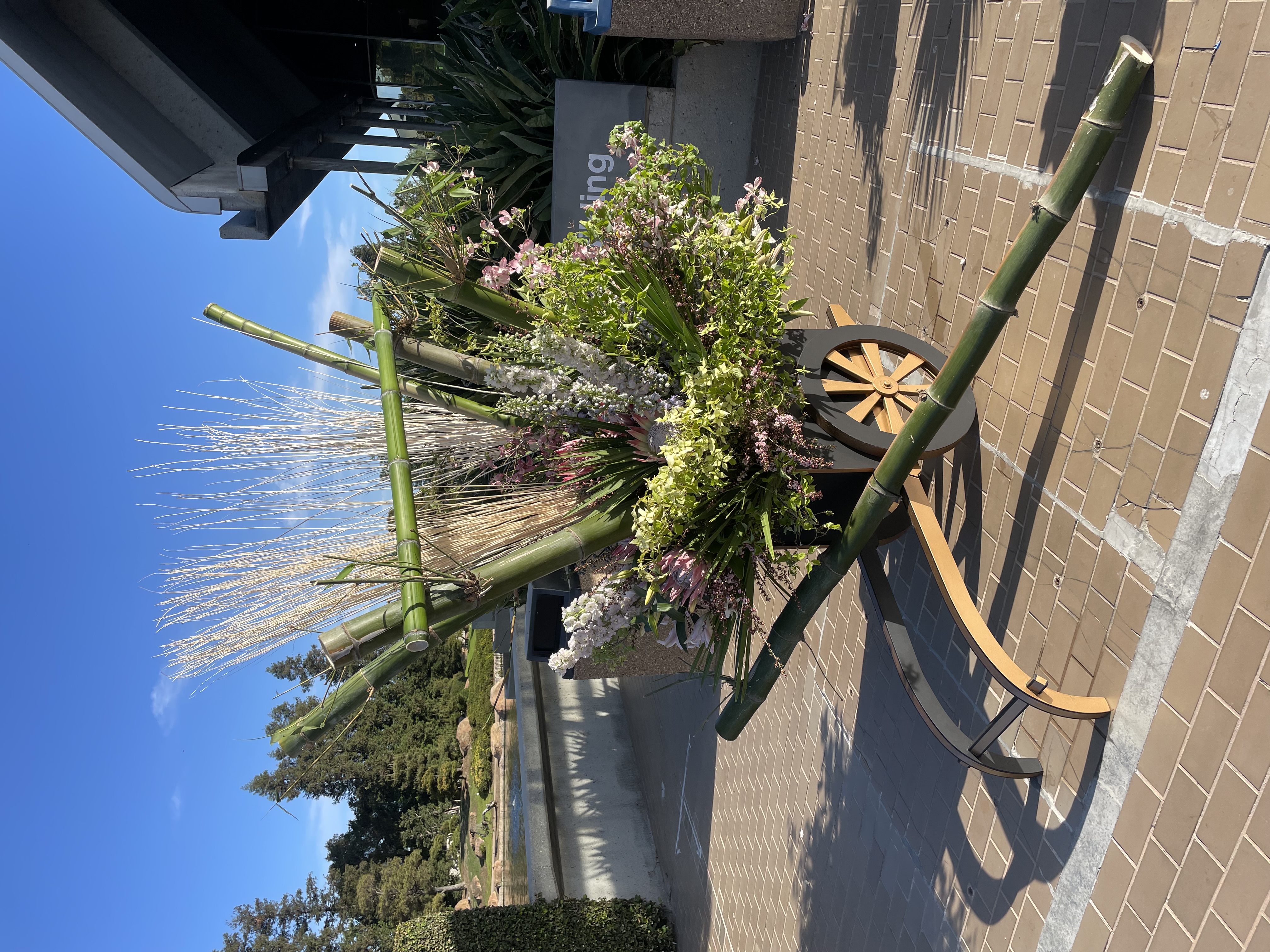
UCLA Extension has given Pacheco the platform to continue to teach the rare artform that is ikebana with the same care that Kassarjian did. By taking over these courses, Pacheco has made it possible to continue spreading Kassarjian’s ikebana techniques, but also to continue creating a space for friendships to form.
“The students created this community. They are not only there to create a flower arrangement, but to be friendly with the rest of the people,” Pacheco said. “And, even after class, they become friends which is wonderful.”
Pacheco has fostered an environment where, through ikebana, his students have found a deeper appreciation of nature.
“When they take a trip, they bring me photos of plants or trees that they saw on their trips. They definitely see nature in a different way than they used to see it,” Pacheco said.
Similar to teaching a class, Pacheco’s favorite things to do with ikebana are demonstrations, teaching people about the art of ikebana live and creating beautiful pieces in an hour and a half.
“It's funny because ikebana really changed my life. I never thought that I would be teaching. And I love doing it. I never would have thought about doing this before,” Pacheco said. “When I started making an arrangement in ikebana, it let me express myself and relax and enjoy. It's like therapy.”
Pacheco’s classes provide the same sense of relaxation for his students, giving them an excuse to pursue a sense of calm and enjoy the freedom that working with nature provides them.
“Many of my students, after a while, they say, ‘Oh, really it’s therapy for me to come to class because I leave all my problems outside the class. I start working on the arrangement and forget about everything else,’” Pacheco said.