

Roosevelt “Rose” Brown has made following his imagination into a successful career. A product design veteran of multiple industries including toys, sneakers and consumer electronics, the new UCLA Extension instructor wants to show others how to funnel their creativity into a steady and rewarding career.
“A great deal of parents are not aware of the creative economy and the many roles that creatives play in the product creation process,” he said. “Almost every product in our homes and workplaces was first birthed in the imagination of a designer.”
Brown remembers his mother saying, “You can’t draw your way to a living, Roosevelt. I don’t want you to be just another starving artist.” But he was determined.
“Coming from the ‘hood, you grow up worrying about finances and resources,” Brown said. “But I knew from a young age that I wanted to make a living with my creativity and hands. Training to become a product designer fulfilled all my dreams.”
Brown is part of a new program pairing UCLA Extension and the SoLa Foundation, where he will introduce product design to young adults in South Los Angeles through the lens of sneaker culture. Starting this fall, he will also lead courses at UCLA Extension for product design, interweaving how artificial intelligence is changing and revolutionizing the industry.
“The simple aspect of exposure to the creative industry is huge,” he said. “It’s still abstract to people that you can make a living with creativity, but you can make a living with that talent. We just need to turn that talent into the proper applicable skills.”
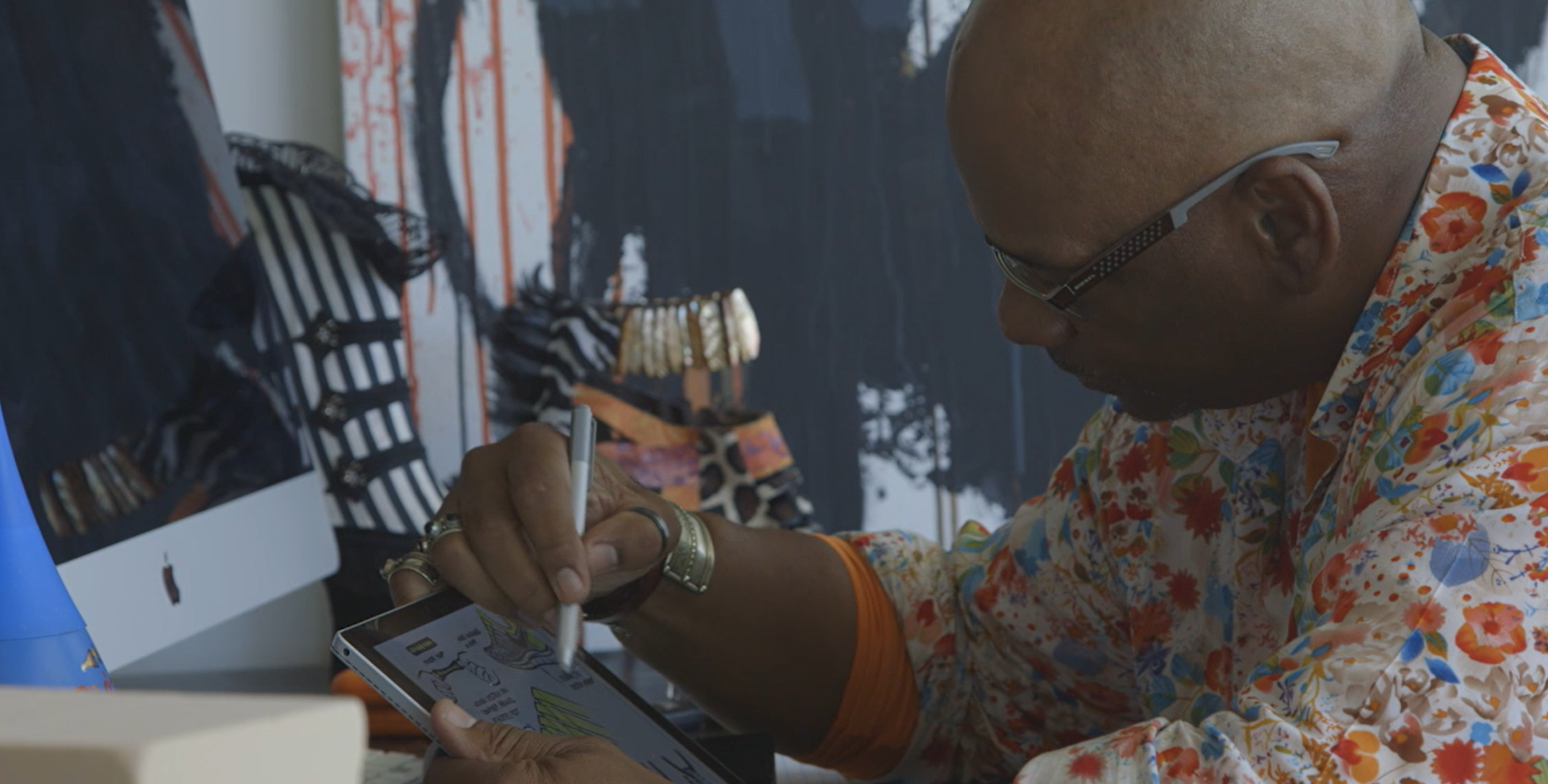
Brown was born in South Central Los Angeles in the “tumultuous 1960s” before moving to Pasadena. There, he spent a lot of his time at the Boys and Girls Club of Pasadena, where he found he had an aptitude for hands-on creation. Brown loved woodworking, and he spent hours making model cars. Later he learned to make jewelry like acrylic, chunky rings that were popular in the 1980s. It was a launchpad for his entrepreneurial spirit of designing, building and selling custom products and jewelry.
After graduating high school with honors, Brown went the junior college route and earned an associate degree in mechanical design and drafting. He transferred to California State University, Los Angeles for engineering, but an instructor there nudged him to enroll at the ArtCenter College of Design for its industrial design program (which was later renamed to product design). That changed everything.
All the sketching Brown had done since he was young was seen, not as a diversion, but as an asset. Product designers make blueprints and initial design concepts. They develop product features and functions. Almost everything needs to be designed: cellphones, toys, laptops, blenders, clothing, sneakers, vacuum cleaners, refrigerators and more.
While still in college, Brown took on freelance work designing performance footwear for Brooks Running, Otomix and Body Glove. It was something he would revisit later in life, but his first stop after graduating was at Disney and Pixar. Young Brown would never have imagined that he would someday be tasked with making the toys that went along with all these iconic movies. He was literally bringing children’s dreams to life.
“The toy I am most proud I designed was Buzz Lightyear. The original toy,” Brown said. “Buzz has a laser and speaks. How do you make that work? How do his wings collapse into his jetpack? All those internal mechanisms, features and functions have to be designed, and then they have to work. That was such a cool project. And now it’s a collectible.”
Brown sees his work as “human-centered products wrapped in art.” Creating toys was incredibly gratifying.
“When you see your design either on the shelf or a kid playing with it, it’s just like a music artist hearing their song for the first time on the radio,” Brown said. “It was surreal to see a manifestation of your creativity and that people value it.”
After about a decade in toys, Brown decided he was ready for a different challenge and returned to footwear. As a brand design consultant, he worked with companies like Speedo, Baby Phat, Pastry, Run Athletics, Levi’s, True Religion, Brooks and Anta Sports. He watched sneaker culture explode and his work become living art. The marrying of fashion and artistic design with the practicality of a shoe that performed was the perfect encapsulation of product design.
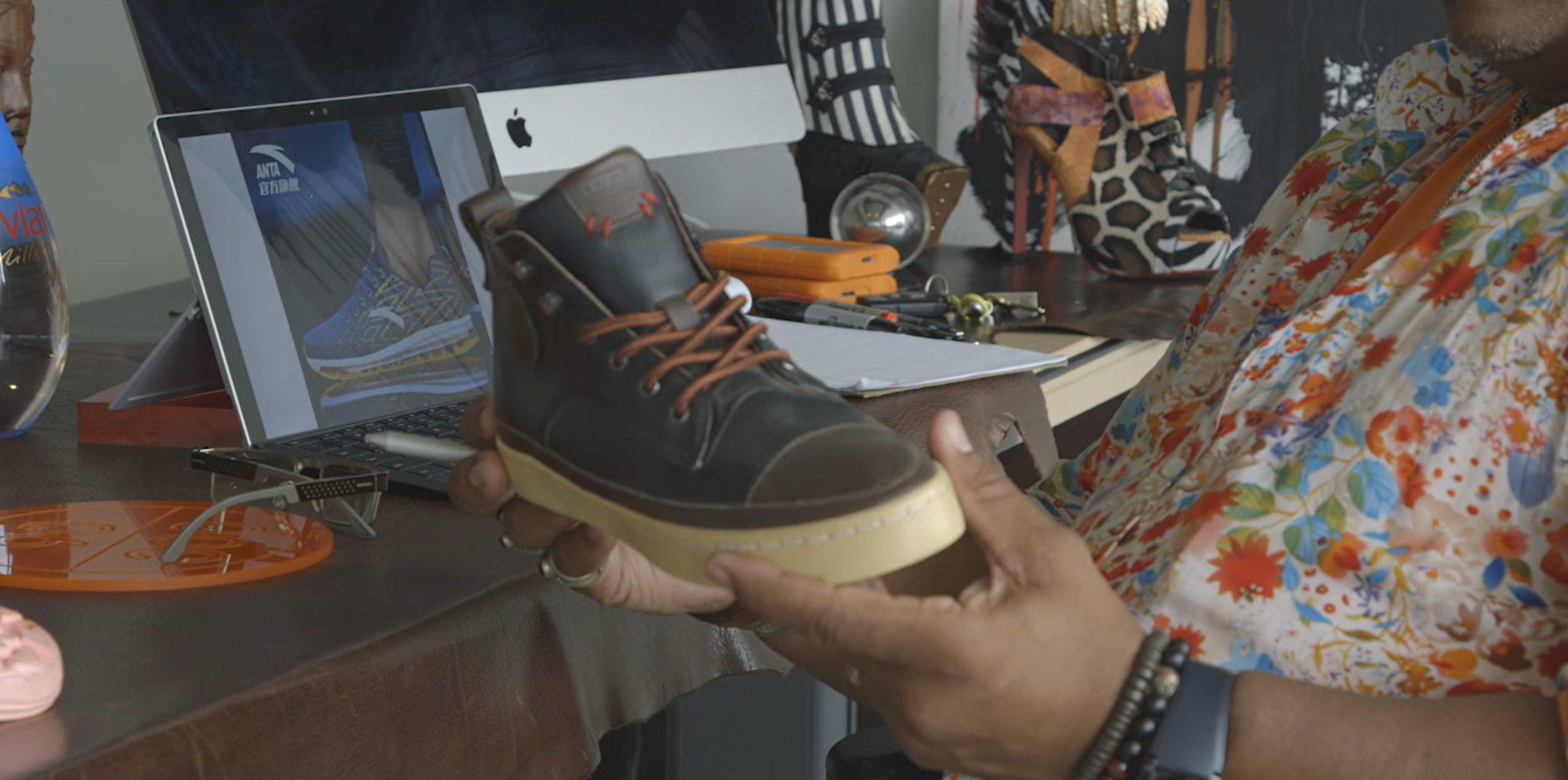
“Sneaker culture is massive now, not just in the U.S. but globally,” he added. “It has made for a great career.”
Brown still works with footwear brands domestically and internationally today – a 30-year love affair that has transitioned into education and teaching the next generation of creatives. He had always wanted to teach. His first teaching gig was at Art Institutes of California San Bernardino and Santa Monica campuses, before returning to his alma mater, ArtCenter, to teach product design across all levels. He retired earlier this year – another successful professional chapter closed, or so he thought.
Through UCLA Extension and its partnership with the SoLa Foundation, Brown will have a wonderful platform to inspire young adults and to show them a real professional pathway in something they deem cool. Brown will be teaching sneaker design, but not in an old-fashioned way.
“This disruption of AI has totally penetrated almost every sector of the product design process and ecosystem, in a very good way,” he said. “It’s another huge and massive tool. It will not replace the designer. The process still has to have human hands, human taste, human problem solving and a meaningful why to the design solution.”
Who would have thought sneakers would be a gateway to a profession so real and tangible?
“Impacting underserved communities is my passion. I was totally that kid,” Brown said. “This is just a really good platform to tap into youth culture right where they are. They don’t get that a lot. They get to take a workshop that is already in a space they value.”
Brown’s course at UCLA Extension will touch on research, trends, concept generation, visual communication and prototyping – all layered with AI workflows. It will serve as an introduction to product design.
He continues to teach for the future Rose Browns – for the children who doodle and dream of making play time more than a hobby.
“You can have an idea in your head and then you get to see it in your hand for real,” Brown said. “The magic of design is awesome.”


