

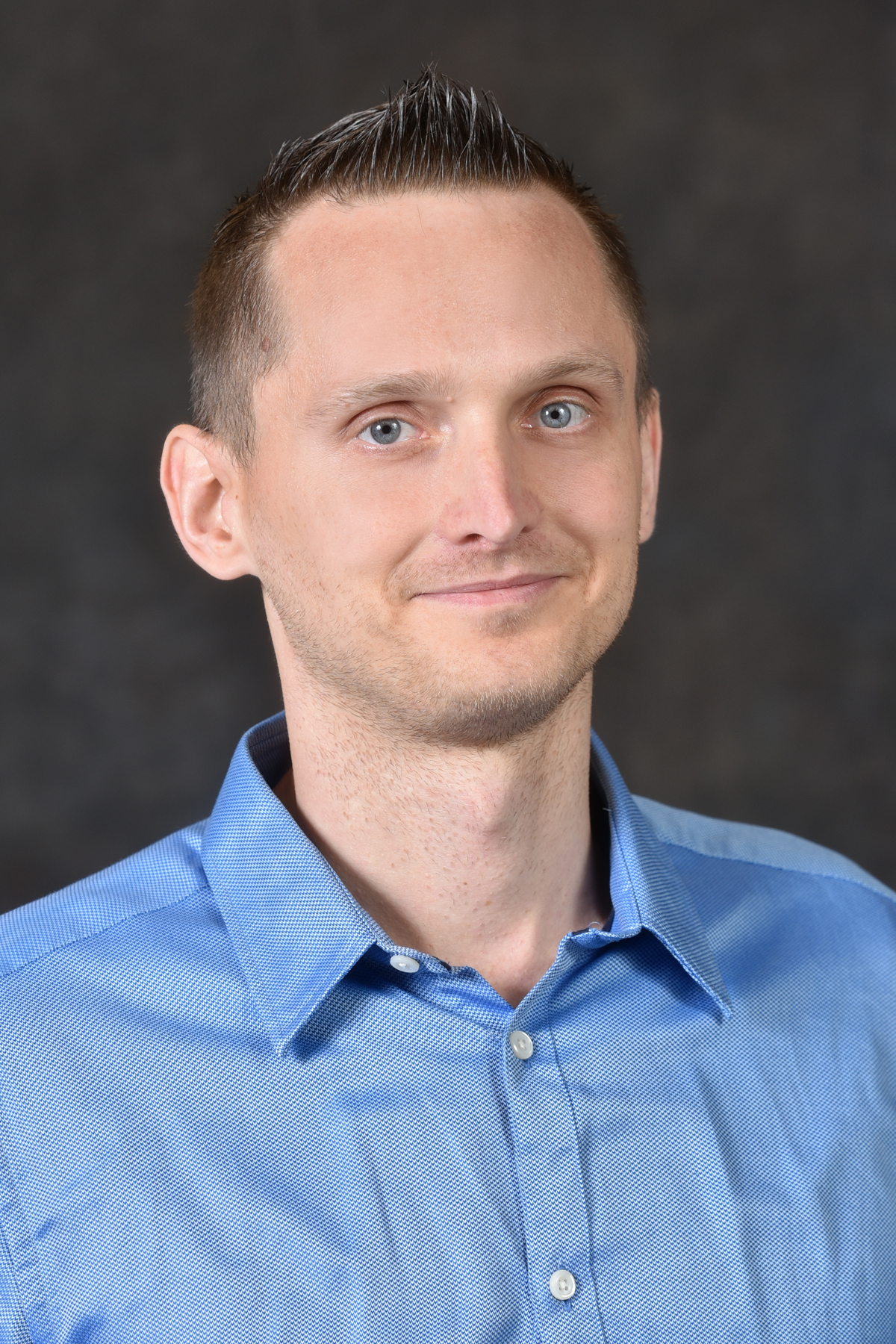
Adrian Mohuczy-Dominiak treasures security. Growing up in Poland, his house was broken into multiple times, and it shaped the future UCLA Extension cybersecurity instructor’s outlook.
“It’s always an interesting experience walking into a house where everything has been strewn about the floor,” he said, recalling the aftermath of a home robbery.
While computers were still emerging in his early childhood, by the time he moved to the United States, he had become quite enamored with the soon-to-be dominant technology.
“I always knew that I was good at computers as soon as they came out,” he said. “I'm a very analytical person, so it just seemed like a really, really good fit.”
He was inspired by the 1990s movie “Hackers,” where the main characters could just sit down at a keyboard, type quickly, and find themselves deep in the most secure recesses of the digital space.
“I wanted to be able to do that – just sit at the keyboard and get into anywhere, any hidden place on the internet that I wanted to get into,” he said.
He first earned associate degrees in internet services technology and networking services technology. Today, he holds a master’s degree in information systems and operations management and works for the University of California, Office of the President as a manager, systemwide cyber risk and threat. Mohuczy-Dominiak sees teaching at UCLA Extension as a good way to give back to the community.
“I wanted to be a mentor to the younger generation of professionals, so what better way to reach them than as a cybersecurity instructor,” he said.
Any subject surrounding computers is always evolving, he added, and to that end Mohuczy-Dominiak has earned more than 30 professional certifications to keep his classroom on the cutting edge of what is needed in today’s cybersecurity landscape. Below, he details to UCLA Extension Newsroom how people can protect themselves from the perils of the digital age:
Why is cybersecurity an important field and an appealing profession for prospective students?
Cybersecurity isn’t going away anytime soon. There's always someone who wants to get into your computer, get your data, steal people's identities, use other people's resources – whether it's health information, personal identification numbers or credit cards. From our perspective, even though AI is coming – you’ve already seen video deepfakes (AI-generated fake videos or audio) emerge as phishing (a fake message that tries to trick you into clicking or sharing info) scams, for example – cybersecurity is going to be really difficult to fully automate. It's an ever-evolving game and that's why I think if people are trying to plan for the future, cybersecurity is probably one of those safer fields to enter, as far as job outlook.
What is a basic precaution everyone should take in 2025?
Do daily work from a standard (non‑admin) account.
The Administrative User is the person who controls every aspect of the computer. They can install anything. They can change any setting of a certain device or computer. A Standard User is a person who just does daily work on a computer. They don't have access to install new things. They don't have access to change most configuration settings of the system.
Let's say you get a phishing email. If you click that email as a Standard User, there's a high likelihood that you don't have the permissions to do what that email wants to force you to do. It gives you that extra pause – would I really want to do this? It's essentially putting a roadblock on myself to make me think about what I'm doing.
How about with passwords?
Turn on multifactor authentication (MFA). It adds a one-time code to your sign-in, which blocks most account takeovers.
Back in the day, we said, “Make your passwords longer, make them unique and change them every 90 days.” That was the recommendation. But who of us can remember more than three, 12 multi-character passwords? And then you have to change them repeatedly.
People were writing out their passwords. People were copying and pasting them into Word documents or text documents, which defeats the purpose. Or they were doing risky things like making their Yahoo password Yahoopassword1.
With MFA, we don’t have to change our passwords as much, or potentially ever. We can loosen our password requirements. And if someone does get our password, as soon as they put it in somewhere, you get a notification on your phone or email. No. 1, they're not going to be able to log in because they don't have the one-time code. No. 2, that tells you somebody's got my password – something weird is going on.
What has changed the most in the cybersecurity field in recent years?
A lot of the basic concepts don't necessarily change year-over-year. However, the complexity and the sophistication of attacks get better-and-better with new technologies.
With AI, for example, someone can ask it to do research on Jonathan who works at UCLA Extension, and then to write a really complex and convincing email to ask him to give us his password. And now do this for every UCLA Extension employee.
And so the cost of creating a very sophisticated phishing scam has gone down significantly from the attacker's perspective. But cybersecurity defenders can use the same technology to help. Now we can use AI to better flag emails that seem compromising.
What is an advantage of attending UCLA Extension?
Most people working at Extension are practitioners of whatever it is they're teaching. And so they take a lot of effort to make sure that the content that they're teaching is updated and timely for right now, not something that's happened five or 10 years ago. Learning theory is good, but here you really have an opportunity for hands-on practice, which is vital.


