

Andrew Kurtz wants people who are struggling with mental health and substance use issues to know it is OK to ask for help. Having worked at UCLA Extension for almost a decade, Kurtz is training the next generation of helpers.
“I have always had an interest in people,” he said. “I think that is true for a lot of people working in mental health.”
Kurtz originally thought his interests were going to lead to a career in biology, which is what he majored in at UCLA. But a seminar about interpersonal psychology altered Kurtz’s trajectory.
“It felt like I could have this immediate impact and connection with somebody who is experiencing pain and challenges, and I could support them effectively,” he said. “That’s kind of what kickstarted everything for me.”
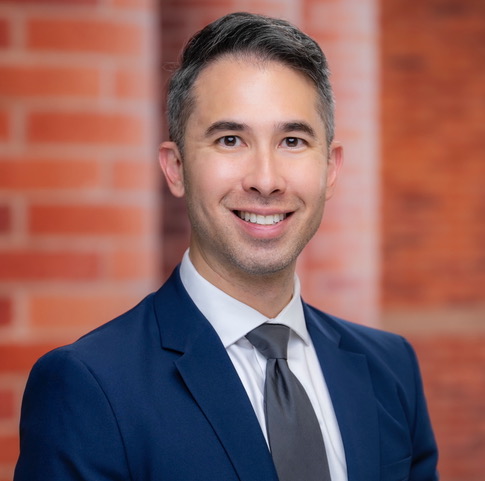
Kurtz attended graduate school at Pepperdine University and received his master’s degree in marriage and family therapy. He worked in community mental health in South Los Angeles, and then at the UCLA Division of Addiction Psychiatry’s Integrated Substance Use and Addiction Programs.
“The work showed me how important it is to get people into care and help them feel comfortable about seeking out that care,” Kurtz said.
At UCLA, he met several like-minded UCLA Extension instructors who opened the door for him to teach at Extension, as well. Kurtz teaches the Supervised Field Work Practicum, which is a key cog in the Alcohol and Drug Abuse Counseling Certificate.
“We work to synthesize those skills and move from the academic to the application,” he said. “We really try and support these individuals to grow their careers and eventually be ready for certification following the end of that program.”
For his day job, Kurtz now works at UCLA Health in a more administrative role as a learning and development supervisor, along with maintaining a private practice with telehealth therapy sessions for his clients.
Below, he talks with UCLA Extension Newsroom about mental health, substance use and how those issues can be impacted by the time of year and technology:
This time of year can be difficult, do you have any advice on how to cope?
A lot comes up during the holidays. Then people struggle with the New Year. This, coupled with the physiological changes that come with less daylight and colder temps, certainly has an impact.
If a person is struggling with any aspect of their life, and it’s a departure from how things were going – that's a great time to reach out to a mental health professional. That's what individuals who were trained in mental health and therapy are there for.
I know there's still a lot of stigma around it. I know sometimes it's hard to navigate finding someone. But a good mental health professional will help guide you through understanding what you’re going through a little bit more. You don't have to have all the answers when you first reach out.
What are some good resiliency tips?
Exercise and movement can be really important wellbeing activities that help to mitigate some of the impact of things like depression, anxiety and seasonal affective disorder. But it’s not a cure. It's not the only thing. And if somebody is really struggling with symptoms, it can be signs of a more significantly impactful mental illness. Sometimes what you might need is professional support.
Sleep is really important. Nutrition is really important. I am a huge fan of routine. With anybody who will listen to me talk about this, I always say structure and consistency are some of the best things for us. But if you are so hyper focused on that where you can't give yourself some grace around how you put that structure in place, then it starts to become less beneficial. So, there is a real balance that comes along with finding what works for you as an individual.
How is technology playing a role in all of this?
The really interesting space right now is the use of AI as a mental health tool. It is something that has a lot of significant potential, but also there's been plenty of documented drawbacks related to that.
I know people turn to LLMs like ChatGPT for mental health support. And it can provide an in-the-moment sense of connection and support. But one of the more concerning outcomes is the potential for AI to induce things like psychosis among individuals who are using them to create a space that is a bit separated from reality. AI can be really encouraging. It can be really reinforcing. It is immediately available to give that feedback.
The challenge is if you are engaged in an activity or a behavior that isn't really helpful for your overall health and wellbeing, you don't need somebody to say, “Keep doing that.” You want somebody to be able to, in a supportive way, challenge you. And that is one of the skills that exists in counseling that takes time to develop.
This is also a space to keep an eye on as organizations and companies develop tools that are evidence-based, that do have ethical guardrails embedded in them that are more HIPAA compliant within the mental health realm. But that is still in its infancy.
What should people remember when discussing mental health and substance abuse?
There is still a ton of stigma that exists around substance use in particular. There is a lot of fear and a lot of blame put on individuals for what we understand as a chronic illness that responds to treatment in the same way that other chronic illnesses do.
The way that a person is treated for having a recurrence related to substance use is very different than if we think about somebody missing a medication dose for hypertension, or not complying with their insulin regimen for diabetes. Granted, these are not exactly the same, but from a chronic disease conceptualization, they're a lot more similar than they are different. Yet we talk about them so differently. That stigma that's embedded in society can be really detrimental to helping an individual recover.
What is the importance of having a robust pipeline of qualified mental health and substance abuse counselors?
There's certainly a continued need within California and across the nation for substance use counselors. It is one of the industries that is more AI-proof currently. It is really hard to replicate that human connection.
Everything that we do through UCLA Extension is evidence-based. It is adherent to the standards of the best practices of the field. But one of the things that we also really emphasize is how do you take these experiences that you've had academically, personally, and translate that into a way to give back, to support somebody else?
I think the real impact of this program is that it isn't just learning for the sake of learning. It's learning for the sake of being able to help people heal in the most impactful way possible.


