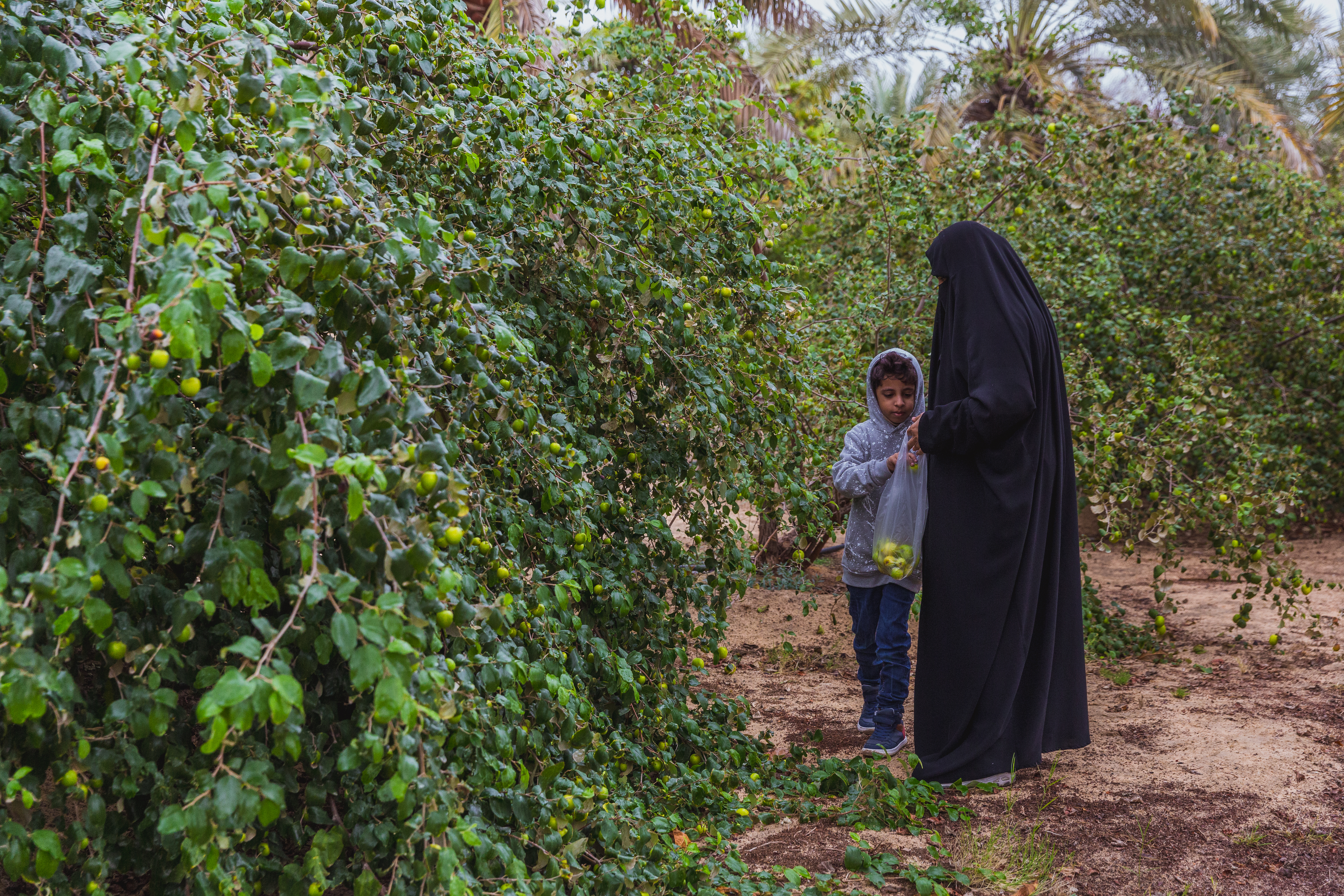
When Zahra Almahdi had the opportunity to study photography in both her home country of Saudi Arabia and the United States, she knew she had to take it. The collaborative program between UCLA Extension and the Misk Art Institute provided a chance for students like her to further sharpen their skills in an international exchange of arts and culture.
Initially, Almahdi was nervous to apply. The program was founded in 2022, with half of it taking place in Riyadh before students visit Los Angeles to complete the program. And because of its dual-nation nature, students have to go through a rigorous application process. Out of thousands of applicants, only the top 10 to 12 students are selected to participate.
“After they announced the photography course I thought why not try?” Almahdi recalled. “So I applied, and luckily I was accepted.”
That decision led her to an amazing experience she will remember for a lifetime.
“Our students are selected based on skill, interests and a whole host of other criteria,” Ross Victory, the program manager for UCLA Extension International Corporate and Custom Programs, said. “This was a way for the Misk Art Institute to give back to the art community in Riyadh, and also to offer a really interesting program that allows the students to obtain their photography certificate in the process.”

The program is divided into a series of six required classes to earn the certificate: Photography 1, Photography 2, Lighting, Portraiture, Personal Storytelling and Portfolio Development.
“It is designed for students with previous photography experience who are interested in conceptualizing their work and taking that work to the next level while incorporating it into a larger international art conversation,” said Natasha Rudenko, Misk instructor.
Rudenko has taught photography at UCLA Extension since 2016 and has worked in the Misk program since its inception. She first taught the final portfolio-building course – given that she was already teaching something similar at UCLA Extension – and now also teaches Photography 1, which covers the basics of photography and teaches students how to view photography as a language.
“I teach the first and last courses, so I’m able to welcome the students into the program and then have the final class with them. It’s great because I know where they start, and it helps me to figure out how to help them to build their final portfolio. I can see their progress from the beginning to end,” Rudenko said.
Almahdi found Photography 1 to be her favorite part of the experience. She recalled the first day of class when the students surprised Rudenko by informing her that they all already knew the basic technical parts of photography that she was meant to teach them. The next day, the instructor came to class with an updated syllabus that focused more on the philosophy of photography.
“We started to open our minds and think about photography as a medium. Is it or is it not a truthful medium? Does it deliver a truthful photograph? Does it deliver a truthful thing or not?” Almahdi said.
She also enjoyed the course on lighting, as this was a topic she had never studied before. She learned how to choose the right brightness and angles to capture the best lighting possible. Her instructor then brought them to a photo studio to put their skills into action. Another course allowed her to develop her own film.
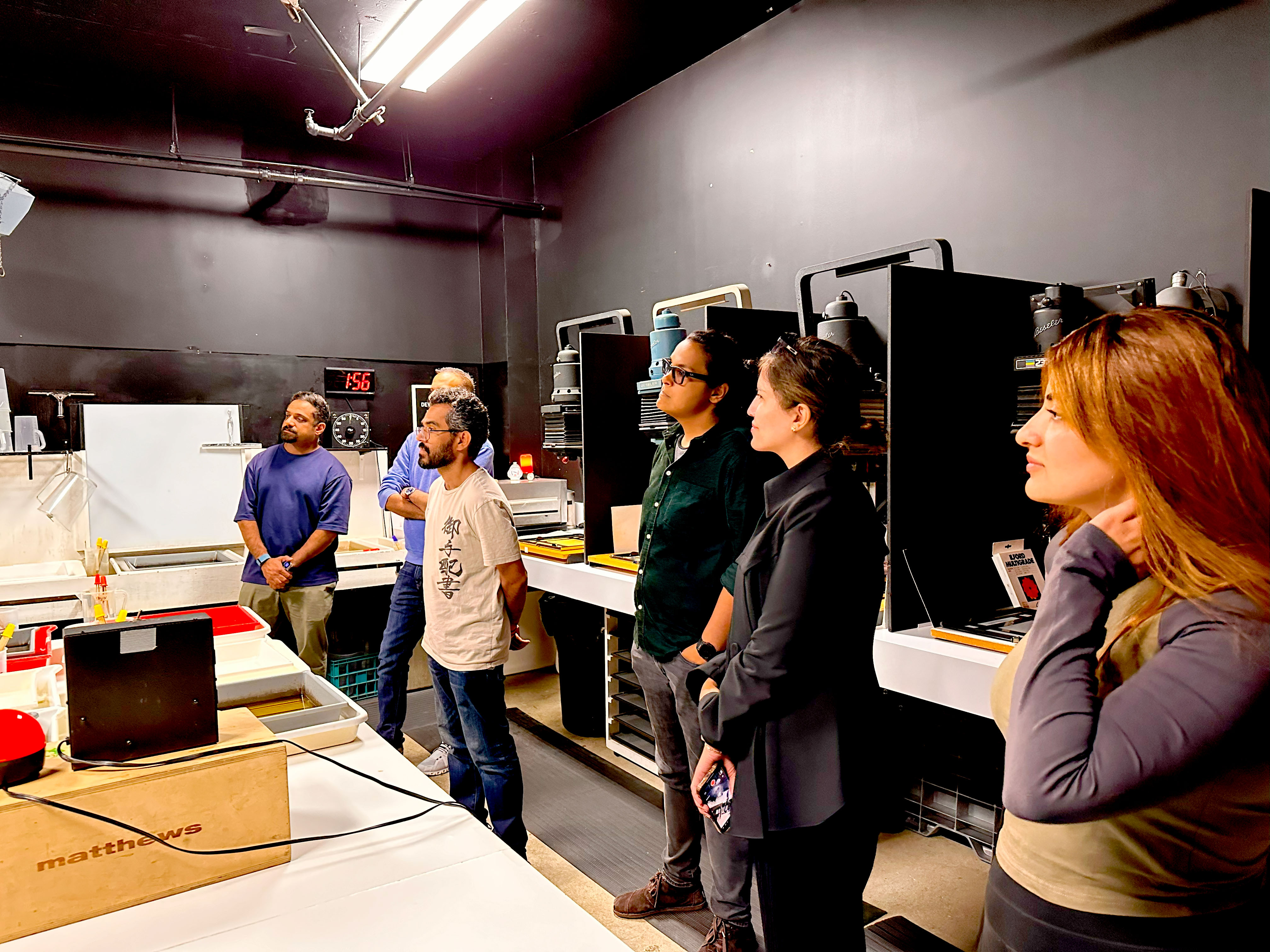
“And for me, it was a dream to develop a photo because we don't have something like this in Saudi Arabia, so it was totally an immersive experience,” Almahdi said.
During her time in Los Angeles, Almahdi said she liked being able to explore the arts scene. Her cohort was able to visit several museums, including the Getty Center, Bergamot Station Arts Center and the Hammer Museum – which she noted was her favorite. She also appreciated the experience of conducting a photo shoot in Malibu.
Rudenko noted that students being exposed to a new environment contributes to their appreciation for the program. That rings true for Almahdi, along with the connections she made with her instructors and fellow students along the way.
“When I first walked into our classroom at the Misk Art Institute, I didn’t know anyone,” Almahdi said. “Now, the people I met have become friends, we share our work, give each other feedback and continue to support one another beyond the program.”
Though the Misk program has evolved over these past few years, Ross and Rudenko agree that the cohort grows stronger each year. Almahdi said she is glad she took a shot at applying, and encourages other students to take a chance at gaining insightful experiences from the program.
“It becomes a cultural exchange that, especially in today's world, is extremely important,” Rudenko said. “We tend to isolate in a familiar environment and familiar bubbles, but programs like Misk burst those bubbles. I wish we were doing more programs with other countries like that.”